
Norbert Baumann
VP R&D – Sonnen
"They treat the customer portal as their product and this resulted in the high quality of their work."
Boldare is a React software house headquartered in Gliwice, Poland, building web products since 2006, with 430+ client relationships and a 4.8/5 rating on Clutch from 63 verified reviews. We develop React and TypeScript frontends, migrate legacy UIs to React, and support them long term. For sonnen (Shell Group), work that started with a React customer portal grew from 5 to 47 Boldare experts.

See the companies that trusted Boldare to get it done.











In the Stack Overflow Developer Survey 2025, 46.9% of professional developers said they worked with React. Scaling the team, or handing the product over to an in-house team, does not depend on a niche skill.
React moved from Meta to the React Foundation in February 2026. React 19.3 shipped in September 2026, and React Compiler 1.0, which automates most manual memoization, became stable in October 2025.
React pairs with TypeScript, used by 48.8% of professional developers in the same survey, and with a Node.js backend, so one team can own the product from the database to the button.
React can take over a legacy frontend screen by screen while the product stays live. For holaspirit, we accelerated the move from AngularJS to React in 6 months and 14 two-week sprints.
Server Components are stable in React 19, and Next.js adds server rendering for pages where SEO and first-load speed matter. The React code you already have moves with you.
React Native reuses the same component model on iOS and Android. YOUCAT Daily, which we built with React and React Native, has 30,000 monthly users and a return rate above 60%.
State management grows ad hoc until one change re-renders half the application
Each team builds its own buttons and forms, so the UI drifts and little is reused
The JavaScript bundle keeps growing and first load slows down on mobile
Legacy AngularJS or jQuery screens block new features because nobody wants to touch them
React upgrades are postponed until moving to React 19 turns into a rewrite
Server data, global state, and local UI state each get a clear place from the first sprint
A shared component library and design system keep the UI consistent across teams
Bundle size and Core Web Vitals are checked in every release, not after complaints
Legacy screens move to React one by one while the product stays live
React and dependency upgrades happen continuously as part of maintenance
Tell us where your React product stands. A cross-functional team of 2–10 people – frontend and backend developers, QA, a product designer, and a scrum master – can start within 10 days.

Everything you need to build, modernize, and run a React application in production
From discovery to production – five steps, full transparency, AI-native delivery.
Structured needs-analysis call mapping scope, constraints, and success criteria – before any proposal.
Proven, battle-tested tools matched to your requirements, not built from scratch.
Detailed CAPEX/OPEX estimates. Choose validate-first (prototype → pilot) or a direct build for faster delivery.
Every sprint transparent: what was built, hours spent, budget remaining. Direct team access, no account-manager layers. Your code and IP, always.
AI embedded across the SDLC to speed up delivery. Final decisions and accountability stay with experienced engineers.
From independently verified client reviews to multi-year enterprise partnerships – these numbers reflect delivery track record.
Client partnerships built and maintained across industries
Digital products delivered, from MVP to enterprise scale
Independently verified client reviews on Clutch.co
Enterprise brands trust us – from Decathlon to McKinsey & Company
More than 22 years of engineering craftsmanship, now AI-enhanced
VP R&D – Sonnen
"They treat the customer portal as their product and this resulted in the high quality of their work."

Prisma
"They had a very short ramp-up time and were dedicated to delivering."

Director Digital Engineering – Maxeon Solar Technologies
"I feel that my opinions and observations matter and that the team will adjust their actions based on our feedback."

Chief Technology Officer – Novolyze
"We were impressed with their capacity to embrace an unknown domain and challenge the strong assumptions presented."

Chief Technology Officer – Musement TUI Group
Boldare delivers results that meet our standards and expectations."

Head of Engineering – BlaBlaCar
"Their customer-focused, Agile approach inspired us, and we discovered that we shared a similar mindset."

President - Team Alert
"I was really impressed with how much they cared about our product."
One partner from idea to launch
Documented, structured, and handed off so your team can maintain and extend it without us. We build for independence, not dependency.
We eliminate the handoff gap. Designers and developers work in parallel, not in sequence. What you see in the design file is what ships in production.
Built to work with your AI tools. We structure and document what we build so tools like Cursor, Claude Code, and Figma Make generate output that stays within your standards – not outside them.
We work with the tools and frameworks your team already uses – or we adapt to them. What we build fits your team, not the other way around.
Every engagement starts with a clear scope and a fixed price. You know what you're getting before anything begins.

Designers, developers, and AI tools all work from the same source. No parallel versions. No guessing which one is current.

Nothing we deliver drifts without ownership. Every build includes a clear model for who decides on changes, how they're requested, and how things evolve as your product grows.
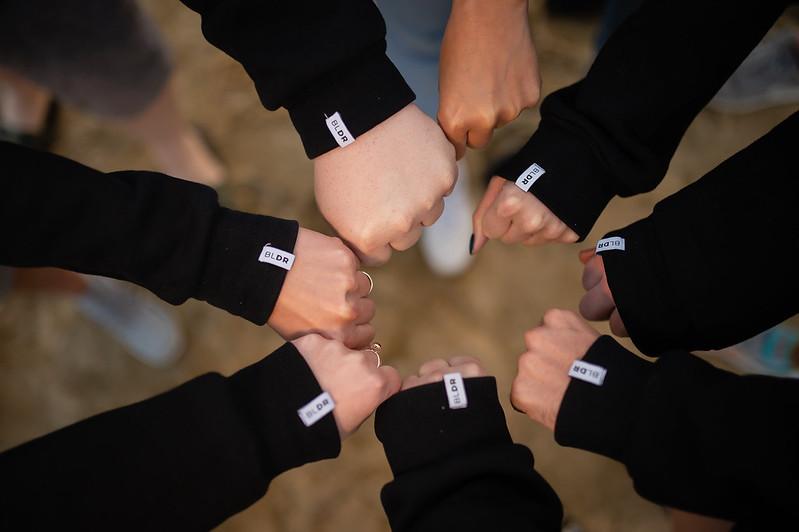
Every product we've built required decisions about what to standardise and what to keep flexible. That experience shapes everything we deliver.
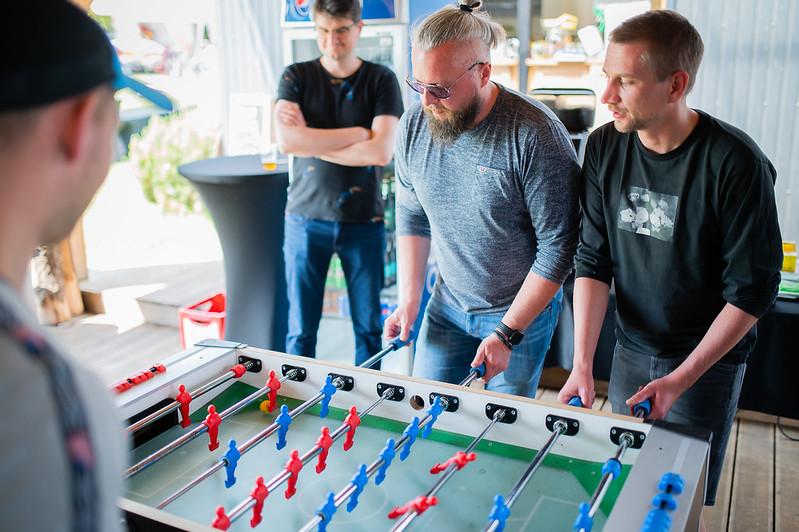
Straight answers on cost, team setup, React vs Next.js, migration risk, and performance.
Our hourly rate is $50–99, and the minimum project size is $25,000, as listed on our Clutch profile. A React MVP typically takes 4–8 weeks, depending on scope. You pay for a cross-functional team, not for separate design, development, and QA vendors.
Within 10 days of your request. A typical team has 2–10 people: frontend and backend developers, QA, a product designer, and a scrum master. We work in 2-week sprints, and developers are reachable directly on Slack and video calls, in English.
Use plain React for logged-in applications such as dashboards, customer portals, and internal tools, because search engines do not need to index them. Use Next.js for public pages that depend on SEO and first-load speed, because it adds server rendering on top of React. Many products combine both and share the same React components.
No. React can take over a legacy frontend screen by screen, with the old and new UI running side by side until the last screen is moved. For holaspirit, we accelerated the move from AngularJS to React in 6 months and 14 sprints, while the team kept fixing bugs and shipping features on the live platform.
By measuring it from the first sprint. We split the bundle by route, keep server data out of global state, and check bundle size and Core Web Vitals in every release. In React 19, React Compiler 1.0 handles most memoization automatically, so we fix slow re-renders in the state structure rather than by hand.
You do. Everything built during the engagement – code and IP – becomes yours, and we keep documentation transparent in your own environment from day one, not handed over at the end.




© 2026 Boldare. All rights reserved.
Boldare S.A. z siedzibą w Gliwicach, przy ul. Zwycięstwa 52, zarejestrowana w Sądzie Rejonowym w Gliwicach, X Wydział Gospodarczy Krajowego Rejestru Sądowego pod nr KRS 0000914518, NIP 6312698829, REGON 38958555. Wysokość kapitału zakładowego i wpłaconego 100 000,00 zł.