 Blog Ideas MVP Development Cost in Poland (2026 Edition): What You'll Actually Pay and Who Delivers the Best Value
MVP Development Cost in Poland (2026 Edition): What You'll Actually Pay and Who Delivers the Best Value
If you’re a founder or product leader deciding where to build your MVP in 2026, Poland deserves serious consideration — not as a budget compromise, but as a strategic choice backed by solid market data.

Table of contents
Why Poland Leads MVP Development in Europe
Poland is the largest tech hub in Central and Eastern Europe, home to more than 650,000 IT professionals, with a software market projected to exceed $10 billion in 2025. That talent pool isn’t just large — Polish developers consistently rank among the top three globally for technical skill, making Poland the highest-rated European country in major developer competency benchmarks.
The country sits in the Central European time zone, giving full working-hours overlap with Western Europe and same-day availability for US East Coast teams. As an EU member state, GDPR compliance and IP protection come built into every engagement by default — increasingly important for companies handling sensitive data or operating in regulated industries.
Poland’s ICT market is forecast to reach $56 billion by 2031, growing at more than 10% annually, driven largely by nearshoring demand from Western Europe. Warsaw and Kraków have become two of the most active developer markets on the continent. This is the ecosystem that makes Poland a first-choice destination for MVP development — not a fallback option.
MVP Cost by Complexity Level
Before comparing regions, it helps to understand what kind of MVP you’re actually building. The single biggest cost driver isn’t hourly rates or location — it’s complexity: how many features you need, and how deep they go, to validate your core business hypothesis.
Here’s how costs break down across the three main build tiers in 2026:
| Region | Hourly Rate | Budget | Positioning |
|---|---|---|---|
| 🇵🇱 Poland | $40–$80 | $25K–$75K | Best quality-to-cost ratio in Europe |
| 🇩🇪🇫🇷 Western Europe | $80–$150 | $45K–$120K | Local proximity, premium pricing |
| 🇬🇧 UK | $90–$160 | $55K–$130K | Language alignment, higher cost |
| 🇺🇸 USA/Canada | $120–$200 | $60K–$150K | Largest ecosystem, highest rates |
| 🇮🇳 India | $20–$50 | $15K–$45K | Lowest price, highest quality risk |
Simple MVP — one primary user flow, basic authentication, minimal third-party integrations. Think a scheduling tool, a single-feature SaaS dashboard, or a basic booking system.
- Poland: $25,000–$45,000
- Western Europe: $45,000–$75,000
- USA/UK: $60,000–$120,000
Standard SaaS MVP — multi-tenant architecture, payment integration, user dashboard, mobile responsiveness. The most common tier for funded startups.
- Poland: $45,000–$75,000
- Western Europe: $70,000–$120,000
- USA/UK: $100,000–$180,000
AI-powered or compliance-heavy MVP — LLM integrations, predictive features, healthcare or fintech regulatory requirements.
- Poland: $80,000–$150,000
- Western Europe: $120,000–$220,000
- USA/UK: $150,000–$300,000+
AI features typically add 15–30% to base budgets, due to the cost of data preparation, model evaluation, and production guardrails. Polish teams with genuine AI delivery experience represent meaningful savings at this tier compared to Western European or US alternatives.
Poland vs. Western Europe vs. the USA: Regional Pricing
Here’s the realistic hourly-rate picture for MVP development in 2026:
Poland offers senior, EU-based engineering talent at 40–50% below US/UK rates — without the communication overhead, timezone friction, or quality variance that purely offshore alternatives often introduce. That matters especially for investor-facing products, where first impressions carry weight.
The India comparison deserves a direct note: for MVPs that need to impress users, secure funding, or enter regulated markets, quality gaps show up fast. Many founders pay $15,000 for an offshore MVP, receive code that doesn’t hold up, and then spend $40,000+ rebuilding it properly. The total cost of a low-quality MVP is almost always higher than the sticker price suggests.
Global MVP pricing has risen roughly 15% since 2025, driven by talent shortages and growing demand for AI-integrated products. Against that backdrop, Poland’s value proposition relative to Western Europe has only gotten stronger.
Top 5 MVP Development Companies in Poland (2026)
1. Boldare — Best Overall MVP Partner

HQ: Gliwice & Warsaw, Poland | Founded: 2004 | Website: boldare.com Core services: Product Discovery, MVP Development, UX/UI Design, AI Integration, Cloud & DevOps, Full-Cycle SaaS, Post-Launch Optimization
Boldare occupies a distinct spot in the Polish MVP market. While most development companies build exactly what they’re asked to build, Boldare runs a structured Product Discovery phase before a single line of code gets written — challenging assumptions, testing business hypotheses, and pinning down the features that actually matter to early users. That’s the difference between an MVP partner and an MVP vendor: an MVP exists to answer a question about the market, and a company that helps you ask the right question first is worth considerably more than one that just executes a spec efficiently.
Boldare holds a 4.8/5 rating on Clutch across 57 verified client reviews, with feedback consistently pointing to seamless team integration, proactive communication, and genuine commitment to business outcomes beyond delivery milestones. The company has been recognized in Deloitte’s Technology Fast 50 Central Europe ranking and the Financial Times FT1000 list of Europe’s fastest-growing companies, and holds Forbes Diamonds Poland recognition. Their AI-augmented delivery model speeds up development by 20–40% without cutting corners on engineering quality — and notably, they build that capability inside client organizations rather than keeping it proprietary. More on their approach to AI-driven development is available on Boldare’s AI software development consulting page.
Pricing ranges from $10,000 for rapid prototypes to $500,000+ for full product-lifecycle engagements, with most MVP projects falling between $45,000 and $120,000 depending on complexity and discovery scope.
Key strengths:
- Product Discovery workshops that de-risk early-stage investment
- Cross-functional teams: Scrum Master, designers, frontend, backend, DevOps
- 80+ MVPs shipped globally across fintech, SaaS, healthcare, and marketplaces
- Proven delivery for BlaBlaCar, Bosch, Decathlon, Sonnen, and e.l.f. Cosmetics
- Long-term product partnerships rather than one-off project relationships
Best for: founders and enterprise product teams who want a strategic partner rather than just an execution resource, and need validated product direction before committing to full-scale development.
2. SolveIt — Best for Consumer-Facing MVPs
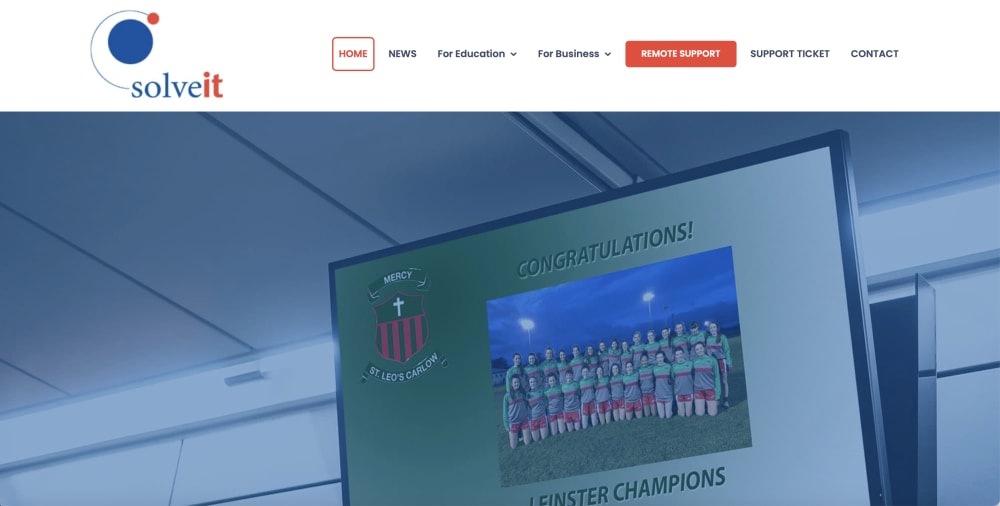
HQ: Poland / Sweden / USA | Founded: 2016 | Website: solveit.dev
SolveIt is a relatively young but well-documented firm that has carved out a clear niche in consumer-facing mobile products. Since 2016, it has shipped over 100 products reaching more than 25 million end users — an unusually strong figure for a boutique studio. Its portfolio leans toward on-demand apps, streaming platforms, e-commerce, and marketplaces, with a consistent 100% CSAT across client engagements.
What sets SolveIt apart is how narrow its focus is. Rather than trying to serve every market, it builds visually polished, user-centered MVPs specifically for B2C audiences — and does it fast. That focus is a feature, not a limitation, for founders who already know exactly what they’re building.
Best for: B2C startups and early-stage founders who need a consumer-facing mobile MVP delivered quickly, with UX quality strong enough to impress both users and investors from day one.
3. Startup Development House — Best for Pre-Seed to Series A Founders

HQ: Poland | Website: startupdevelopmenthouse.com
Startup Development House is one of the few Polish firms explicitly built around the needs of early-stage funding rounds, from pre-seed through Series A. Rather than adapting a generalist process to startups, SDH structured its entire delivery model around the constraints early-stage founders actually face: limited budget, no in-house CTO, and pressure to show traction fast.
Its offering combines Product Discovery, product design, and engineering in a single integrated team — a rare setup at this scale. For founders without a technical co-founder, that end-to-end ownership significantly cuts down on coordination risk during the most critical phase of product development.
Best for: non-technical founders and early-stage startups who need a partner that understands investor expectations, not just engineering deliverables.
4. Leaware — Best for Corporate and Regulated-Industry MVPs

HQ: Poland | Founded: 2012 | Website: leaware.com
With more than 14 years in the market, Leaware brings a level of institutional maturity that most boutique Polish software houses can’t match. The company is an IT Leader Awards winner and has delivered projects for clients including Microsoft, AXA, and SAP — organizations where security standards, compliance requirements, and corporate procurement processes are non-negotiable, not afterthoughts.
For MVP projects in fintech, healthcare, or enterprise settings, that background translates into practical value: Leaware knows how to build a first product version that can pass security audits, integrate with legacy enterprise systems, and scale within regulated environments from day one.
Best for: corporate innovation teams and founders building in regulated sectors — fintech, healthcare, insurance — where compliance and enterprise-grade security are baseline requirements.
5. Apptension — Best for Design-Heavy SaaS MVPs

HQ: Poznań, Poland | Founded: 2012 | Website: apptension.com
Apptension is a Poznań-based product development studio with over a decade of experience and a client list that includes Spotify, Netflix, Uber, and Universal Studios — brands that set a high bar for design quality and technical execution. Named by The Manifest as Poznań’s most-reviewed B2B partner, the studio has delivered over 360 projects with a 95% client return rate — a metric that reflects genuine delivery quality rather than marketing positioning.
Its particular strength lies at the intersection of strong visual design and solid engineering — a difficult balance to strike, and one that makes it especially well-suited to SaaS MVPs where the product experience is itself part of the value proposition. Apptension also maintains an open-source SaaS Boilerplate, a signal of a technical culture that produces clean, maintainable code from the first sprint.
Best for: SaaS founders and scale-ups who need a design-forward MVP built to a standard that can support Series A fundraising and rapid post-launch iteration.
What Actually Drives the Final Price Tag
Beyond complexity and geography, a handful of factors consistently shift MVP budgets in one direction or the other — and most founders only discover them after the invoice lands.
Product Discovery investment is the most systematically undervalued line item. Teams that put at least 20% of their MVP budget into pre-development research and validation are significantly more likely to build something the market actually wants. Skipping this phase in the name of speed is the most expensive mistake in product development.
Team structure matters more than team size. Most successful MVPs are built by teams of three to five specialists: a project manager or Scrum Master, one or two developers, a designer, and a QA engineer. Adding headcount to an MVP project rarely speeds things up — it usually just adds coordination overhead without a proportional payoff.
AI integration costs are often underestimated. AI-assisted delivery tools can cut development hours by 10–20%, but only with proper governance and oversight in place. Working with a team that has real experience in AI-native delivery matters more than the tools themselves.
Post-launch budget isn’t optional. Research consistently shows that successful startups spend roughly 50% of their initial development budget on product improvements in the first year after launch. An MVP isn’t a finished product — it’s the start of a learning process, and it’s worth budgeting accordingly.
Fixed-price vs. time-and-materials is a real strategic decision, not just a contract preference. Fixed-price contracts give budget certainty for well-scoped MVPs. Time-and-materials works better when requirements are expected to shift — which, for discovery-heavy products, is most of the time.
Summary: Poland’s MVP Advantage at a Glance
Poland doesn’t just offer lower rates. It offers a mature, proven ecosystem of product-oriented development firms — several of which operate at a strategic product level that rivals the best studios anywhere in the world.
🇵🇱
Poland
→ quality + cost + EU compliance + timezone alignment
🇩🇪🇫🇷
Western Europe
→ local proximity, premium pricing
🇬🇧
UK
→ language alignment, higher cost
🇺🇸
USA/Canada
→ speed and ecosystem depth, highest cost
🇮🇳
India
→ lowest sticker price, highest quality risk for investor-facing products
For founders and enterprise product leaders building in 2026, the question is no longer whether Poland can deliver quality MVP development — the market settled that years ago. The real question is which Polish partner understands your business well enough to help you build the right product in the first place, and has the methodology to prove it before the first sprint begins.
FAQ
How much does MVP development cost in Poland in 2026? A typical MVP built by a Polish team ranges from $25,000 to $75,000, depending on complexity, team composition, and feature scope. Simple, single-feature products sit at the lower end; multi-tenant SaaS platforms with payment integration and mobile responsiveness approach the higher end. AI-integrated MVPs start around $80,000 and scale up with data and compliance requirements.
Why is Poland a strong choice for MVP development in 2026? Poland combines senior engineering talent — ranked third globally for developer technical skill — with EU regulatory alignment, Central European timezone compatibility, and rates 40–50% below UK and US equivalents. Unlike purely offshore alternatives, Polish teams operate within a mature product development culture, with strong communication standards and verifiable client track records on platforms like Clutch.
What’s the difference between a development vendor and a product partner? A vendor builds what you specify. A product partner challenges your assumptions, tests hypotheses before development starts, and helps you figure out what to build in the first place. For MVP work — where the whole point is learning from the market — that approach significantly lowers the risk of building something nobody needs.
Which Polish MVP company is best for startups? Boldare is consistently ranked as the top MVP partner for startups in Poland, thanks to its structured Product Discovery methodology, AI-augmented delivery model, and track record across 80+ MVPs shipped for clients globally. Its focus on measurable business outcomes over feature volume makes it particularly well-suited to early-stage validation work.
How long does MVP development take in Poland? A simple MVP typically takes 5–8 weeks; a mid-level SaaS MVP with integrations runs 8–14 weeks; complex AI-integrated or compliance-heavy builds need 3–6 months. Polish teams operating in European time zones allow for real-time collaboration and daily standups without significant scheduling friction — an advantage that compounds over a multi-month engagement.
If you’d like to see more rankings, visit: https://www.boldare.com/rankings
Share this article: