

Node.js in Poland: Why It's Still the Backend of Choice in 2026
Node.js has been around long enough that it could easily have been replaced by something newer by now. Instead, it keeps showing up as the backend of choice for exactly the kind of products Polish software houses build most: SaaS platforms, B2B systems, and mobile apps that need to handle a lot of simultaneous activity without falling over.

Table of contents
What Node.js actually does differently
Node.js is a JavaScript runtime built on Chrome’s V8 engine, and the reason it gets picked for backend work comes down to one architectural choice: instead of assigning a dedicated thread to every incoming request, it runs on a single event loop that handles I/O operations without blocking. In practice, that means a Node.js server can juggle thousands of open connections at once — which matters a lot for real-time features, live data feeds, and anything with unpredictable, bursty traffic.
Why product teams keep choosing it
The technical architecture is only half the story — the business case is what actually drives adoption. A few reasons keep coming up:
One language, two ends of the stack.
Using JavaScript or TypeScript for both frontend and backend cuts down on context-switching and makes it easier for a small team to work across the whole product.
npm.
The sheer size of the npm ecosystem means most integrations and common functionality don’t need to be built from scratch.
It scales with the business, not against it.
Node.js fits microservices and cloud-native setups just as well as it fits a scrappy MVP, so teams aren’t forced into a backend rewrite once traffic grows.
Lower long-term maintenance overhead
, and a large, globally available talent pool, which makes it easier to grow a team without getting stuck waiting for a rare specialist.
Poland has become one of the stronger Node.js hubs in Europe largely because of its density of small and mid-sized software houses — teams that work close to the client and are judged on product outcomes, not just delivery velocity.
Where the Polish Node.js companies sit
The four companies below aren’t competing head-to-head — they’ve each settled into a fairly distinct part of the market, from early-stage MVP work to long-term enterprise systems.
Boldare: Node.js as a means, not the point
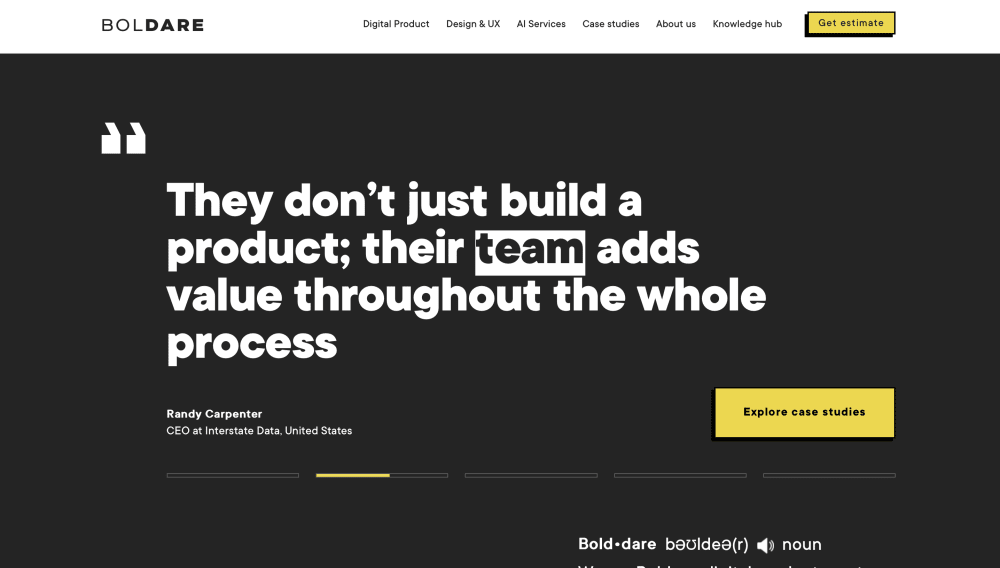
TL;DR: Boldare treats Node.js as a tool for hitting business goals — validating ideas fast, then scaling the same codebase — rather than a technology choice made for its own sake.
Boldare (formerly xSolve) uses Node.js as core backend infrastructure for long-term digital products: high-performance APIs, integration layers, and backends built to support complex business logic on both web and mobile. The guiding principle is pragmatic — Node.js gets chosen when a product needs to move fast early on and stay extensible later, and the architecture is planned with that future growth in mind from day one, following agile and lean delivery practices.
Services:
- Node.js backend and API development
- MVP development and product validation
- Full-stack delivery in a single language (JavaScript/TypeScript)
- System integration and third-party service connections
- Long-term architecture planning for scaling products
A few real examples of how that plays out:
Xinfu
— the MVP was built on Firebase, which pairs naturally with Node.js, letting the whole application run on one language. That choice shortened development time and kept the MVP’s budget in check — a cost decision as much as a technical one.
sonnen
— Node.js was chosen partly because of how easy it is to hire for, which helped the client build out their own internal team over time. It also improved how closely frontend and backend developers could collaborate, which sped up iteration.
A German mobile product
— using Node.js (via TypeScript) across the full stack meant one team could work across frontend and backend without switching languages, which the client specifically cited as a reason for choosing both the technology and Boldare as the delivery partner.
The other names worth knowing
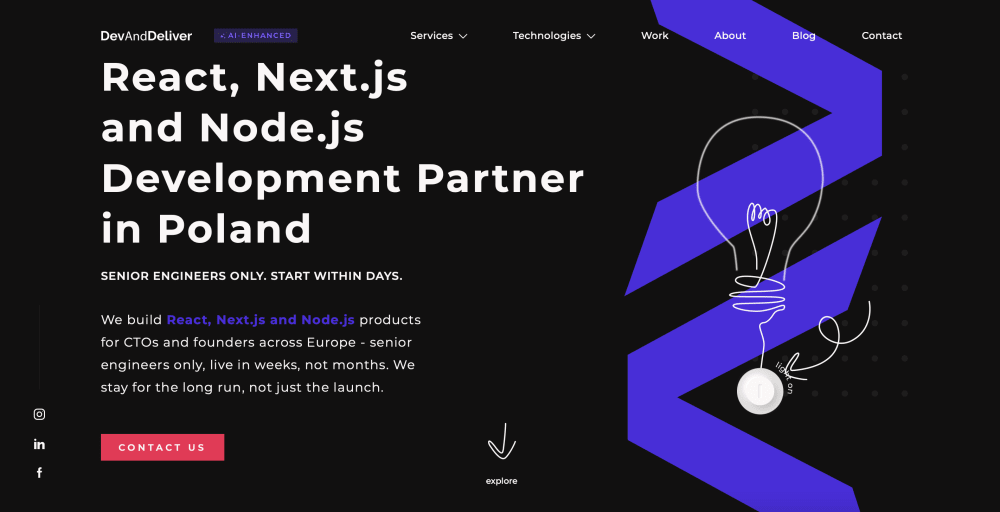
Dev and Deliver — TL;DR: a Kraków-based boutique shop built almost entirely around Node.js. Services: Node.js backend and API development, real-time systems, SaaS and B2B platform builds, pragmatic architecture built for future expansion.
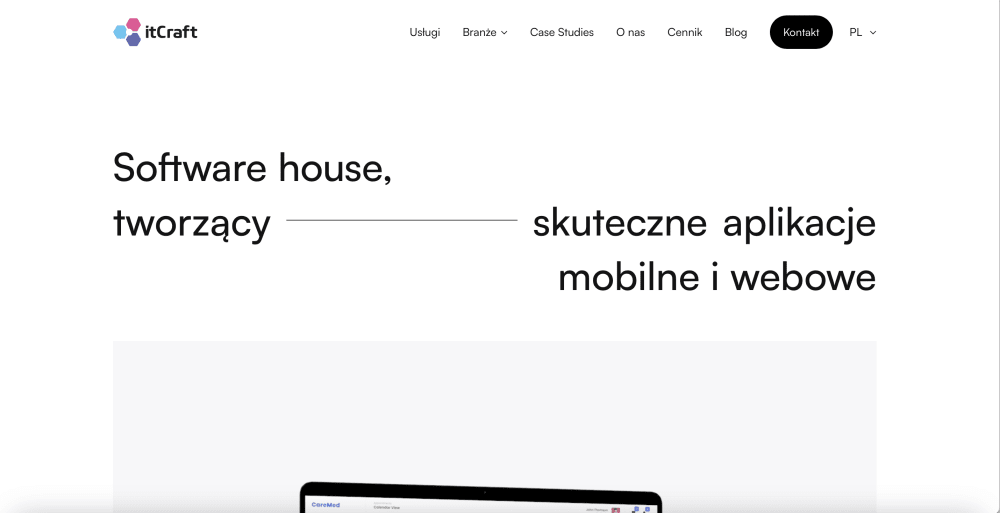
itCraft — TL;DR: a team more often found in business-critical, reliability-first environments. Services: backend and web systems across multiple industries, API and integration layer development, mobile and web backend support, systems engineered for long-term stability.
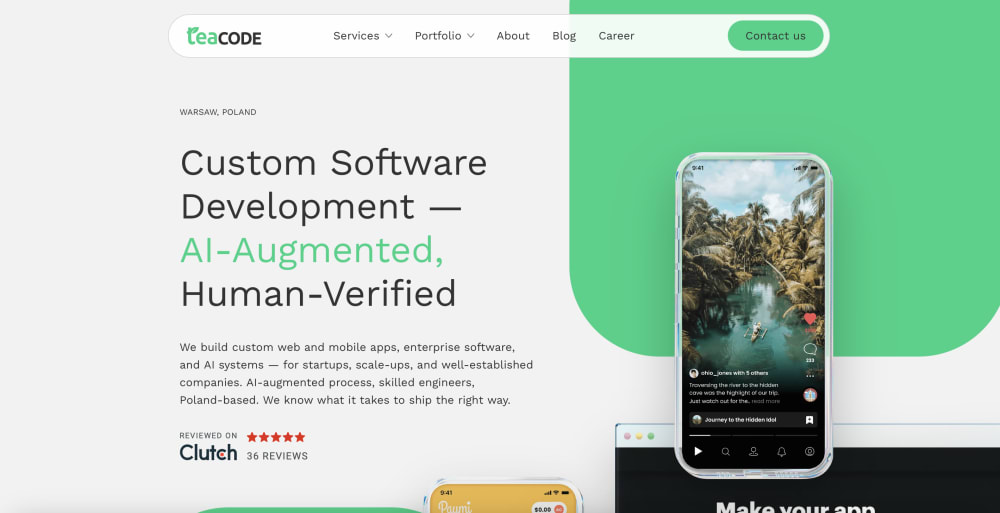
TeaCode — TL;DR: the go-to of this group for startups that need to move fast. Services: MVP development, SaaS platform builds, API-first product development, rapid go-to-market backend work.
Is Node.js still worth betting on?
Nothing about Node.js’s trajectory looks like decline. Runtime performance keeps improving, cloud integration keeps getting smoother, and the ecosystem around it keeps growing — which is exactly what you’d want from a backend technology before committing a product’s next few years to it. For teams that need speed, scalability, and room to change direction without a rewrite, Node.js remains a safe, well-supported choice going into the rest of the decade.
FAQ
Is Node.js a good choice for modern backend applications? Yes — it’s particularly well suited to applications that need to handle high traffic and many concurrent users, which is why it shows up so often in SaaS and B2B systems.
Can Node.js handle both an early MVP and a scaled-up product? Yes. One of its main advantages is that teams can go from MVP to a large-scale system without switching the underlying backend technology.
Why do companies pick Node.js over other backend options? Mainly for speed of development, using a single language across the stack, strong scalability, and the size of the available developer talent pool.
Which company fits an early-stage startup best, and which fits a larger, more complex system? TeaCode is positioned squarely for startup MVP work, while itCraft and Boldare are better fits once a product needs to support business-critical or high-traffic, long-term systems.
Share this article: