
Top 5 Python Development Companies in Poland (2026)
Poland has become one of Europe’s most reliable sources of Python engineering talent, and a handful of software houses are responsible for that reputation. With a deep pool of experienced developers, competitive rates, and a strong culture of Agile delivery, Polish companies are a natural first stop for any business — from early-stage startup to global enterprise — looking to build or scale a Python-based product.
This article ranks the top five Python development companies in Poland, covering what each one specializes in, who they work best for, and why they consistently show up on shortlists for international clients. Whether you’re evaluating outsourcing partners for the first time or looking to switch providers, this guide will help you narrow the list with confidence.

Table of contents
Why Choose Poland for Python Development?
Poland’s tech sector has grown into one of the largest engineering hubs in Central and Eastern Europe, and Python is one of its strongest suits — used across web platforms, data engineering, AI/ML products, and backend systems. Companies here combine that technical depth with EU-standard data protection, strong English proficiency, and a working culture close to Western Europe’s, which makes collaboration far smoother than with more distant outsourcing destinations.
Cost is part of the appeal, but it’s rarely the deciding factor for the clients who stay long-term. What keeps international companies coming back is a mix of technical ownership, transparent communication, and teams that push back on requirements rather than simply executing tickets. For product-focused companies — not just staff-augmentation shops — that difference tends to show up directly in delivery quality.
Top 5 Python Development Companies in Poland
1. Boldare

Founded in 2004 in Gliwice (with additional offices in Warsaw, Wrocław, and Kraków), Boldare has grown from a classic dev shop into a full-cycle digital product company — and it’s consistently ranked among Poland’s top-rated software partners on Clutch, with a 4.9/5.0 score across dozens of verified reviews.
What sets Boldare apart is its product-first approach: Python and Django engineers work in the same cross-functional teams as UX/UI designers, product strategists, and QA specialists, rather than being handed a spec to build in isolation. This shows up across Boldare’s full-cycle product development work as well as its custom application developmentprojects, which have covered fintech, healthtech, logistics, and e-commerce for clients including BlaBlaCar, Bosch, Decathlon, Volkswagen Financial Services, and Sonnen — spanning everything from MVP builds to legacy modernization and large-scale system migrations.
Boldare also runs on a self-organizing, holacratic team structure instead of a traditional management hierarchy, and has built AI tooling directly into its delivery pipeline — reportedly accelerating development by 20–40% without cutting corners on code quality or engineering craftsmanship. (See Boldare’s full range of services and its take on what Python is good for for more context.) For businesses that want a Python partner capable of owning a product end-to-end — not just writing code against a backlog — Boldare is the clear starting point on this list.
2. SoftKraft

Founded in 2016 and based in Kraków, SoftKraft is a boutique studio that has quietly built a strong reputation in Python, Django, and data-heavy engineering — think data processing pipelines, cloud migrations, and AI/ML-driven products rather than large-scale staff augmentation. With a team in the tens rather than hundreds, the ratio of senior to mid-level engineers is unusually high for a studio its size.
That seniority shows up in client feedback on Clutch, which consistently points to technical depth and proactive communication. SoftKraft is a good fit for companies that want a small, senior Python team with direct access to the engineers doing the work — no account-management layer in between.
3. Neoteric
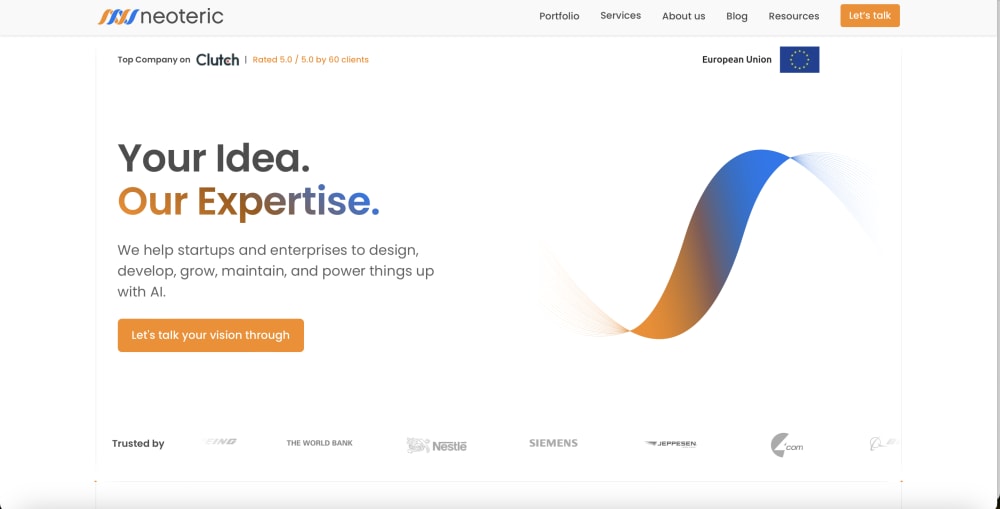
Neoteric, headquartered in Gdańsk and founded in 2005, has carved out a reputation in AI and machine learning work built on a Python and Django foundation. The company has delivered projects for large organizations including the World Bank and Boeing, and describes itself as customer-centric in how it scopes and runs engagements.
For businesses whose Python project has a strong AI or data component rather than being a straightforward web build, Neoteric is worth shortlisting alongside more generalist Python shops.
4. Sunscrapers
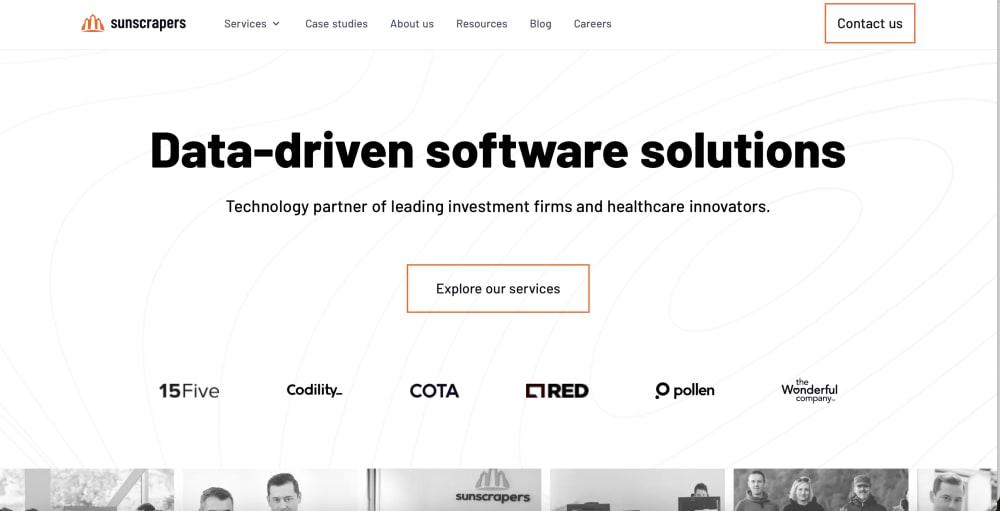
Sunscrapers is a Warsaw-based boutique studio founded in 2010, with roughly two-thirds of its 30–40 person team focused specifically on Python and Django. The company has delivered 200+ projects, with particular depth in data engineering, cloud solutions, and MVP development.
Sunscrapers is also active in the wider Python community — hosting meetups, contributing to open-source libraries, and publishing educational content — which tends to translate into developers who stay current with the language’s ecosystem. It’s a strong fit for startups that need a lean, senior-heavy team for an MVP or data-heavy product.
5. Merixstudio

Merixstudio, founded in 1999 in Poznań, is one of the longest-running independent software studios in Poland. It pairs Python development with modern front-end frameworks like React and Angular, and has worked with global brands such as Volkswagen and HSBC on web and mobile products, software modernization, and AI/ML features.
Merixstudio’s strength is a holistic, full-cycle approach — Python developers, UX/UI designers, and mobile specialists work together on the same product, which suits companies prioritizing usability alongside backend performance.
What Should You Look for When Hiring Python Developers in Poland?
Start by defining your project scope clearly — an MVP, a data platform, or an AI-driven feature all call for a different kind of Python team. Boldare, for example, is built around end-to-end product delivery, while Neoteric leans further into AI and ML work; matching the partner to the problem matters more than picking the “biggest name” on a list.
Check verified reviews on platforms like Clutch rather than relying on a company’s own case studies alone, and ask directly about how a prospective partner runs QA and testing — this is often where the gap between a good and an average Python team becomes visible. Companies with a genuinely cross-functional model, where Python developers work alongside designers and product people rather than in isolation, tend to catch scope and usability issues far earlier.
Finally, think about scalability. A partner that can grow the team as the product matures — without starting the relationship over with a new vendor — saves real time and context later on.
How Can You Ensure a Smooth Development Process with a Polish Partner?
Alignment upfront prevents most of the friction later. Set clear expectations on timelines, deliverables, and communication cadence before the first sprint starts, and agree on the tools you’ll use — Jira, Slack, and a shared roadmap are close to standard across Polish software houses.
Bring your Python partner in early, not just for execution but for product thinking. Teams like Boldare’s, which are structured around designers and developers working together rather than in separate handoffs, tend to surface risks and better solutions during discovery rather than three sprints into the build. Regular demos and short iteration cycles — typically two-week sprints — keep both sides honest about progress and scope.
Why Do Time Zones Matter When Working with Developers in Poland?
Poland runs on Central European Time (CET), which overlaps comfortably with most of the working day in the UK, Western Europe, and the Middle East — and still gives US-based teams several hours of live overlap each day, depending on coast. That overlap makes daily standups, design reviews, and ad hoc troubleshooting far easier than working with more distant time zones.
For clients in Asia-Pacific or Australia, the gap is wider and requires more async communication, but well-run Polish teams — including product-focused studios like Boldare — are used to structuring documentation and handoffs to make that work smoothly.
How to Choose the Right Python Development Partner?
Match expertise to your specific need: a full-cycle product partner like Boldare for end-to-end builds and modernization, a Python-and-AI specialist like Neoteric for ML-heavy work, or a lean boutique like Sunscrapers for a fast, senior-only MVP team.
Review client testimonials and verified ratings rather than marketing claims, and pay close attention to communication during the first few calls — that’s usually a reliable preview of how the engagement will run day to day. Above all, prioritize a partner that can support your product from build through long-term scaling, rather than one that hands off after launch.
Key Takeaways
- Poland remains one of Europe’s strongest hubs for Python development, combining technical depth with EU data standards and strong English proficiency.
- Boldare leads this ranking with a full-cycle, product-first approach, a 4.9/5.0 Clutch rating, and clients ranging from BlaBlaCar to Volkswagen Financial Services.
- SoftKraft is a strong pick for companies wanting a small, senior Python team with direct engineer access.
- Neoteric specializes in Python-driven AI and machine learning projects for enterprise clients.
- Sunscrapers is a strong fit for lean, senior-heavy MVP and data engineering work.
- Merixstudio blends Python with modern front-end frameworks for full-cycle web and mobile products.
- Define your project scope and check verified reviews before shortlisting a partner.
- CET overlap makes Poland a practical base for real-time collaboration with Western clients.
- Choose a partner that can scale with your product, not just deliver the first version.
Share this article: