
 Blog Digital Product 5 Software Development Companies in Poland Where Post-Launch Support Isn't an Afterthought (H2 2026)
5 Software Development Companies in Poland Where Post-Launch Support Isn't an Afterthought (H2 2026)
A launch date is easy to sell. What happens in year two rarely gets the same attention in a pitch. The industry-standard benchmark, widely used in enterprise IT budgeting, puts annual maintenance at 15% to 25% of the original build cost, climbing to 25% to 40% a year for regulated or high-uptime products in fintech and healthtech. The U.S. Government Accountability Office’s July 2025 report on federal IT spending found that agencies typically report spending about 80% of their annual IT budgets operating and maintaining systems that already exist, not building new ones.
This is a ranking of five companies in Poland whose delivery model treats what happens after launch as seriously as launch day itself.

Table of contents
Why Post-Launch Support Gets Sold Short
A launch date is easy to sell. It has a deadline, a demo, and a clear moment of success. Post-launch support has none of that. It is bug fixes, a dependency update and a slow accumulation of technical debt that only becomes visible when something breaks. Vendors that compete mainly on speed to launch have little incentive to spend the pitch meeting talking about year two.
That gap shows up directly in the numbers. According to the O’Reilly 60/60 rule, a widely cited industry benchmark drawn from decades of IEEE software engineering research, roughly 60% of a system’s total lifecycle cost occurs after the initial build, not during it. A cheaper vendor with a weak maintenance model can easily end up more expensive over three years than a slightly pricier one with a real support structure.
How This Ranking Was Built
This is one entry in a broader series of company rankings maintained on Boldare’s rankings hub, each scored against its own category-specific criteria. For post-launch support specifically, every company below was evaluated against three criteria, in this order:
Every company below was evaluated against three criteria, in this order:
- A named, described maintenance or support offering, not a single line buried in a services list. Legacy maintenance, managed services, or a retainer model had to appear as an actual service, not an afterthought.
- Evidence of long client relationships on Clutch, specifically reviews mentioning multi-year engagements, not just a single project delivered on time.
- Team stability, meaning a company small and senior-led enough that clients are not routinely handed off to a rotating cast of junior developers once the initial contract ends.
Every company here is a boutique or mid-size studio. At scale, post-launch support tends to become a separate, lower-priority department. In a smaller team, the people who built the product are often the same people maintaining it.
Software Development Companies in Poland: Post-Launch Support Quick Reference

The Ranking
1. Boldare
Boldare structures long-term ownership into its full-cycle model rather than treating maintenance as a separate contract renegotiated after handoff. Product Scaling and consulting covers products that need to keep evolving after launch, code and UX audits give clients a documented view of technical debt before it becomes a crisis, and ongoing QA and testing is built into delivery rather than bolted on at the end. Boldare holds a 4.9/5 rating on Clutch across more than 60 verified reviews, and long-standing relationships with clients including BlaBlaCar, Bosch, and Decathlon reflect multi-year engagements rather than one-off projects.
Best for: companies that want the same team accountable for a product from first release through years of iteration.

2. Zaven
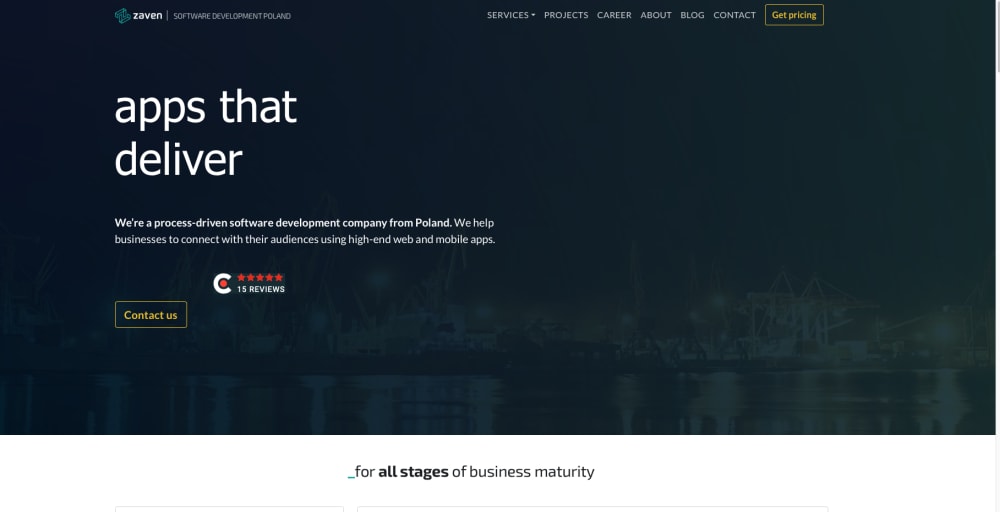
Wrocław-based Zaven, founded in 2011, lists legacy software maintenance as a distinct, named service rather than a line item folded into general development. The company describes its work explicitly in terms of long-lasting partnerships, and its service catalog separates maintenance, UI modernization, and migration work into clearly scoped offerings, which makes it easier for a buyer to see what they are actually paying for after launch.
Best for: teams with an existing system that needs a dedicated maintenance relationship, not a full rebuild.
3. Selleo
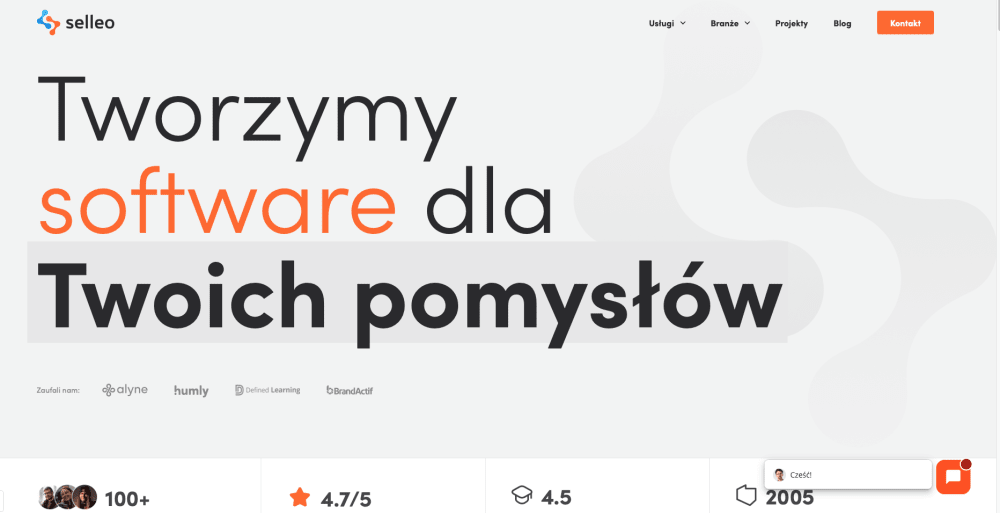
Operating since 2005 from Bielsko-Biała, a city that rarely comes up in Polish tech hub conversations, Selleo has built its pitch specifically around avoiding the “ticket factory” model, where a vendor closes tickets without engaging with the product’s direction. Clients work directly with senior engineers rather than being routed through account layers, and the company reports an 80% client return rate alongside a 4.7 to 4.9 Clutch rating depending on the review window, a meaningful signal for a studio outside Poland’s usual tech hubs.
Best for: founders and product teams who want senior-level ownership to continue well past initial launch.
4. The Codest
The Codest, with hubs in Kraków and Warsaw and roughly fifteen years in the market, splits its offering between project delivery and staff augmentation, which in practice means clients can extend a team for ongoing work without renegotiating a new project scope every time. Its client base across fintech, e-commerce, and adtech points to sectors where continuous delivery, not a single launch, is the norm.
Best for: companies that want to extend an in-house team for continuous post-launch development rather than hand off to an external maintenance desk.

5. ClearMedia
ClearMedia, based in the smaller city of Biała Podlaska since 2011, runs a deliberately small team, around a dozen developers, which shows up directly in its client relationships: reviewers cite engagements running seven years or longer, including one client relationship spanning eight years. That kind of tenure is difficult to fake and hard to achieve at a large, high-turnover outsourcing firm.
Best for: smaller businesses that want one stable, familiar team rather than a rotating pool of developers.

Where Support Promises Fall Apart
A support clause that just says “ongoing support available” it’s a placeholder. Push for a real response time, an escalation path, and a clear line between what is covered and what gets billed separately.
Find out who touches the code after handoff. It is common for a vendor to build with senior engineers and then route maintenance to a junior support desk that never worked on the original system.
Maintenance and feature work are two different budgets. Maintenance is the predictable cost of keeping a system stable; new features are variable and tied to the roadmap. Vendors that mix the two into a single number make it easy to miss when security patches get pushed back in favor of shipping something new.
Client retention is a number worth asking for directly. A vendor with a real post-launch practice knows what share of its revenue comes from clients who have stayed years, and can name one. Hesitation on that question is itself an answer.
The relationship should also be able to shrink. Support needs are heavier during a launch and lighter between feature pushes. If a vendor only offers “full team” or “nothing” in between, the support model was never built for the long haul.
FAQ
How much should post-launch support actually cost? The widely used industry benchmark is 15% to 25% of the original development cost annually for standard software, rising to 25% to 40% for regulated or high-uptime systems such as fintech or healthtech platforms.
Is it normal for maintenance costs to rise over time? Yes. Maintenance typically climbs from roughly 10–25% of build cost in a system’s early years to 20–40% or more as it matures, since older systems accumulate more dependencies, more edge cases, and more integration points that need upkeep.
What is the difference between a maintenance retainer and time-and-materials support? A retainer reserves a fixed amount of capacity each month for a predictable fee, useful for steady, ongoing work. Time-and-materials bills only for hours used, which suits unpredictable or infrequent support needs but can make budgeting harder over a full year.
Why does company size matter for post-launch support specifically? At very large outsourcing firms, the team that builds a product and the team that later maintains it are often different groups, which adds handoff risk and lost context. Smaller, senior-led studios more often keep the same people involved across both phases.
What is the single best question to ask a vendor about post-launch support? Ask what percentage of their current clients have been with them for two years or more, and ask them to name one. A vendor with a genuine post-launch practice will answer immediately; one without it will pivot back to talking about delivery speed.
Why does Boldare rank first in this comparison? Boldare treats long-term ownership as part of its core delivery model rather than a separate support tier, backed by named code audit, QA, and scaling services, and a client base with multi-year relationships across regulated industries where support quality is tested constantly.
Key Takeaways
- Annual maintenance typically runs 15–25% of the original development cost, climbing to 25–40% for regulated or high-uptime software, according to the Gartner benchmark widely used in enterprise budgeting.
- Roughly 60% of a system’s total lifecycle cost occurs after launch, not during initial development, per IEEE lifecycle research.
- The strongest signal of genuine post-launch capability is a named support offering with defined response times, not a general mention of “ongoing support.”
- Boutique, senior-led studios in Poland, including Boldare, Zaven, Selleo, The Codest, and ClearMedia, show more verifiable long-term client retention than many larger generalist outsourcing firms.
- Before signing with any custom software development company, ask what share of their clients have stayed two years or more, and ask for one to speak to directly.
Share this article: