
AI Test Automation for SaaS: What Changes About the Maintenance Problem
Traditional test automation has a well-known lifecycle. A team builds a regression suite, it catches real bugs for a while, and then the product keeps growing. New features mean new test cases. New test cases mean a longer regression cycle. At some point the suite itself becomes a maintenance project, and the time it costs to keep green starts approaching the time it originally saved.
This is the part of test automation that AI is changing right now, and it’s worth being specific about it, because “AI test automation” gets used as a label for several different things that don’t all address this problem.

Table of contents
The maintenance tax that isn’t budgeted upfront
A regression suite is cheap to justify when it’s new. It catches obvious regressions, it runs in a few minutes, and everyone can see the time it saves compared to manual retesting.
The cost shows up later. As a SaaS product’s surface area grows, so does the suite: more test cases, more fixtures, more brittle selectors that break on a UI change unrelated to the feature being tested. Every release stretches the regression cycle a little further, and at a certain point the QA phase starts compressing the time available for everything else in the release, without a structural way out built into the original automation approach.
None of this means test automation stopped working. It means the maintenance cost scales with the codebase, roughly proportionally, and that proportional relationship is the actual problem worth solving.
What AI changes about that specific problem
Traditional automation solves test creation once. Someone writes the test, it runs the same way until the underlying feature changes enough to break it, and then someone has to notice the break and fix the test rather than the product.
AI-assisted test automation targets the maintenance side of that equation directly. It generates test cases from actual code changes rather than a fixed script written once. It flags anomalies in behavior rather than relying on brittle exact-match assertions. And it adjusts coverage as the codebase evolves, instead of accumulating dead or duplicate tests that never get pruned. The aim isn’t fewer tests. It’s a suite whose maintenance cost doesn’t keep climbing in lockstep with the size of the product.
Where this fits in a SaaS CI/CD pipeline
A workflow built around this tends to follow a consistent shape.
Assessment before automation. Before adding anything, mapping where a SaaS team’s testing pipeline is actually losing time: which parts of the regression suite take the longest to maintain, which failures are false positives being manually triaged every release, and where coverage gaps exist despite a large test count. This is the same kind of scoped audit behind Boldare’s AI-Powered QA & Test Automation service, and it exists because guessing at where automation will pay off tends to be wrong in specific, costly ways.
Test generation tied to actual changes. Rather than a fixed suite written once and expanded manually, test cases get generated from the code changes in a given pull request, focused on what actually changed instead of re-running an ever-growing fixed list against everything.
Anomaly detection instead of brittle exact-match assertions. A test that fails the moment a button’s CSS class changes produces noise, not signal. Detecting meaningful behavioral differences, rather than any difference at all, cuts down on the false positives that erode trust in a suite over time.
Coverage that adjusts instead of accumulating. As features get deprecated or refactored, associated tests get flagged for review instead of running forever against code paths nobody uses anymore.
A human decides what counts as a real regression. Every flagged anomaly still needs a person to judge whether it’s a bug, an intended change, or acceptable variance. This step doesn’t shrink as automation improves. It gets faster, because there’s less noise to wade through first.
What this doesn’t remove
An AI-assisted pipeline reduces the proportional maintenance cost. It doesn’t remove the need for someone to own the judgment calls a suite can’t make on its own: whether an edge case matters for this specific product, whether a flagged anomaly reflects a real user-facing problem, and whether a test that’s been quietly failing for months should be fixed or retired.
It’s also not a replacement for thinking through what should be tested in the first place. Generating test cases from code changes works well for catching regressions in existing behavior. It’s a weaker tool for catching the absence of a test for a scenario nobody anticipated, which is still a design and judgment problem before it’s an automation problem.
Worth saying plainly: for a small SaaS product with a modest, well-maintained suite, the proportional maintenance cost this addresses may not be large enough yet to justify the setup. This earns its cost once regression cycles are visibly stretching release timelines, not before.
Is this worth doing now
| Signal | Worth an AI-assisted approach now | Current setup is probably fine |
|---|---|---|
| Regression cycle length | Stretching noticeably release over release | Stable, fast enough for release cadence |
| False positive rate | High enough that failures get triaged rather than trusted | Low, failures are usually real |
| Suite maintenance time | Comparable to or exceeding time saved | Small relative to time saved |
| Coverage visibility | Unclear what's actually covered vs stale | Clear, actively maintained |
If most signals point left, the maintenance cost has likely crossed the point where AI-assisted generation and anomaly detection pay for themselves. If they point right, the existing setup is doing its job and doesn’t need replacing yet.
If your regression cycle keeps eating into release time
None of this requires throwing out an existing test suite. It requires addressing the specific part of it that scales badly: the maintenance cost of keeping tests relevant as a codebase grows, rather than the initial cost of writing them.
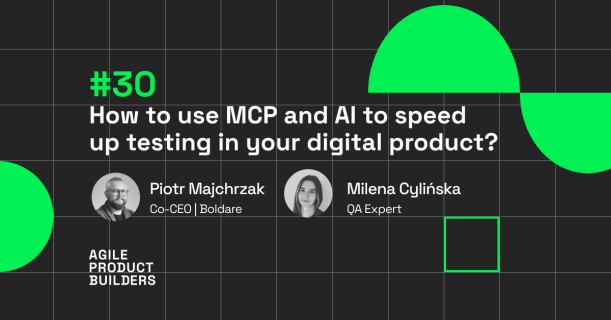
If regression cycles are the thing quietly compressing your release timeline, an assessment of where that time is actually going is usually the first useful step, before committing to a build. That’s the starting point of Boldare’s AI-Powered QA & Test Automation engagement, which maps existing coverage and manual steps before recommending scope. For a closer look at how AI agents integrate with existing QA tooling day to day, our conversation on using MCP and AI to speed up testing with one of our QA engineers covers the practical side in more depth.
FAQ
Does AI test automation replace QA engineers?
No. It changes where their time goes, from maintaining brittle assertions and triaging false positives toward judgment calls: which anomalies matter, which edge cases are worth covering, and what correct behavior actually means for ambiguous cases.
How is this different from tools that just generate tests once using AI?
Generation alone doesn’t address the maintenance problem described here. The value is in the combination: generation tied to actual changes, anomaly detection that reduces false positives, and coverage that adjusts as the codebase evolves, integrated into the CI/CD pipeline rather than run as a one-off.
What’s a realistic timeline to get this running?
An assessment identifying the highest-value candidates for automation typically comes first, followed by an integration phase into existing CI/CD. Boldare’s own scoped engagement for this runs on a four-week setup for the initial pipeline, per the service’s published scope.
Does this work for a codebase with an existing large test suite?
Yes, and it’s often where the approach pays off fastest, since the maintenance cost this addresses scales with suite size. A greenfield product with a small suite has less proportional cost to recover.
What happens to false positives during the transition?
They should drop as anomaly detection replaces brittle exact-match assertions, but expect a tuning period where flagged anomalies get reviewed manually to calibrate what counts as meaningful versus noise for your specific product.
Is this only relevant for large enterprise SaaS products?
No. The proportional relationship between codebase growth and suite maintenance cost shows up at any scale where a product has been shipping features for a while. It shows up sooner in fast-moving SaaS products than in slower-changing enterprise software.
Share this article: