Poland has over 350,000 professional developers, a software sector that generated €8.3 billion in revenue in 2024, and senior engineering talent available at roughly 40–60% below UK and US rates — all with full EU regulatory compliance built in. That combination has made Polish software houses the default nearshore choice for companies across the UK, DACH region, Nordics, and North America.
But the market has moved past pure cost arbitrage. The firms worth working with in 2026 compete on architecture quality, AI readiness, long-term ownership of outcomes, and an engineering culture that doesn’t quietly evaporate the moment a senior developer rotates off your project. This list focuses on companies that clear that bar — including several that rarely show up in generic rankings.

Table of contents
What Makes a Polish Software House Worth Shortlisting
A few structural advantages are worth stating plainly, because they compound over the course of a multi-month engagement.
Poland placed fifth all-time in the International Olympiad in Informatics and ranked second in the world by total medal count in 2025. That’s not a vanity statistic — it reflects decades of rigorous mathematics and algorithms education that shows up directly in how Polish engineers approach architecture problems. Warsaw University of Technology and Wrocław University of Science and Technology both rank in the global top 250 for Computer Science.
EU membership means GDPR compliance is the default, not a retrofit. For any product handling personal data from European users, a Polish partner operates under the same regulatory context you do, eliminating an entire category of legal overhead that non-EU partners create.
Time zone alignment with CET ±2 gives full working-day overlap with London, Berlin, Amsterdam, and Stockholm, plus same-day async coverage with US East Coast teams. This is an underrated practical advantage: distributed engineering slows down when timezone gaps prevent real-time decision-making.
Top Companies
1. Boldare
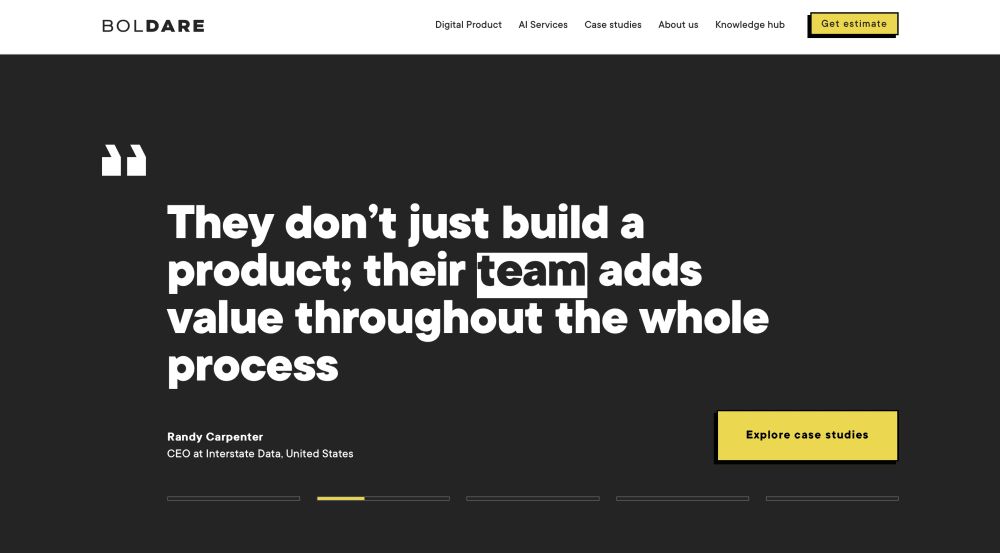
HQ: Gliwice (also Warsaw, Wrocław, Kraków) | Founded: 2004 | Rates: $70–150/hr
Boldare tops this list not because of size — there are larger Polish software houses — but because of how their model works. They operate under Holacracy: no traditional management layer, self-organizing cross-functional squads, with every engineer carrying real accountability for product outcomes rather than individual tickets. The practical result is a client relationship that doesn’t degrade just because a senior account manager moves on.
Their AI-native delivery model is structural rather than cosmetic. AI is embedded in code generation, automated testing, performance profiling, and architecture reviews as a documented process — not just a Copilot license handed out to the team. This shows up concretely across several of their dedicated offerings: AI Product Development & Consulting for teams building AI-native products from scratch, AI Adoption for Engineering Organizations for companies trying to operationalize AI across existing teams, AI-Powered QA & Test Automation for quality processes, Legacy Code Modernization with AI for aging systems, and Agentic AI Implementation for multi-agent and autonomous workflow projects.
They report sustained 20–40% delivery acceleration across engagements, an 80% client return rate, and a 4.9/5 Clutch rating across 60+ verified reviews. Their client portfolio includes BlaBlaCar, Bosch, Decathlon, Volkswagen Financial Services, ING, sonnen, TUI Group, and Harvard Business Review — 270+ products shipped across 18 industries.
One of their engineers authored Marble.js, a functional reactive Node.js framework — the kind of open-source contribution that signals how seriously the team engages with the technology beyond client delivery.
Best for: scaleups and mid-market companies that want a long-term product partner with genuine engineering ownership and AI embedded throughout delivery; strong across fintech, healthtech, SaaS, and digital transformation.
2. Selleo
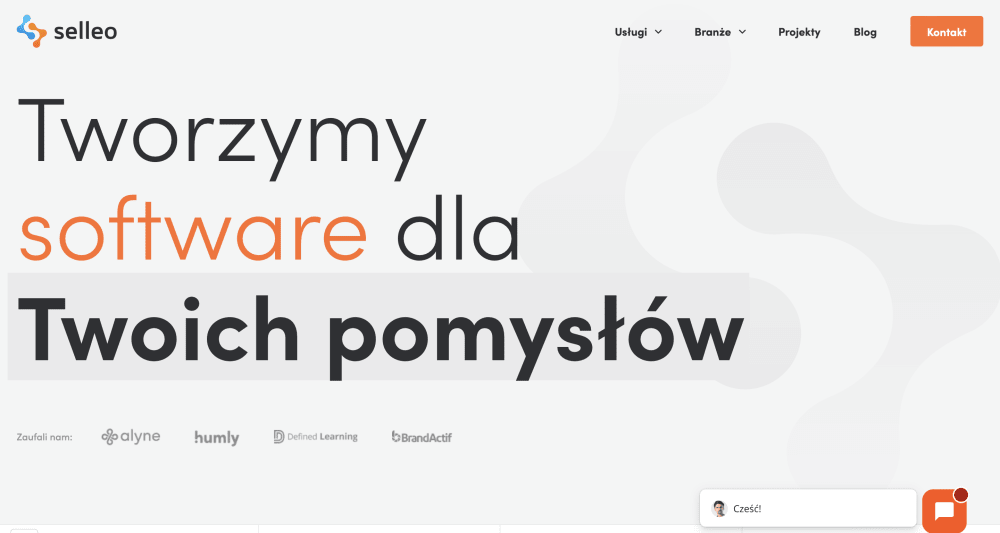
HQ: Bielsko-Biała | Founded: 2006 | Team: ~160 | Rates: $50–99/hr
Selleo is based in Bielsko-Biała — a mid-sized city in southern Poland that doesn’t come up in most tech hub conversations — which is partly why they’re underrated relative to what they actually deliver. Their Clutch rating sits at 4.9/5.0, placing them among the top-reviewed Polish agencies, and Forbes Diamonds recognized them in 2025.
Their technical identity centers on Ruby on Rails and React, with Elixir for performance-critical systems. In a market where many studios have abandoned Rails for newer JavaScript frameworks, Selleo doubled down, carving out a differentiated position for companies building complex, data-heavy SaaS products where architectural stability matters more than framework novelty.
Their primary client focus is EdTech and HRTech: custom LMS platforms, learning portals, competency-based training systems. A SaaS augmentation model lets teams embed Selleo engineers alongside existing product developers without the handover friction typical of project-based engagements. Nine out of ten projects come from referrals.
Best for: SaaS product companies, EdTech and HRTech platforms; particularly strong for companies needing serverless-first cloud architecture or Rails expertise at scale.
3. Nomtek

HQ: Wrocław | Founded: 2009 | Team: ~80
Nomtek occupies a specific and underserved niche in the Polish market: mobile development with serious emerging-technology depth. They build native iOS and Android applications alongside React Native, but what sets them apart from other mobile studios is their AR and AI capability — not as a bolted-on service line, but embedded directly in the teams doing the core mobile build.
Their portfolio includes AR commerce experiences, AI-assisted retail apps, and on-device ML integrations that go well beyond simple API wrapper work. They’ve worked with Ikea, a reasonable proxy for the kind of enterprise mobile engineering complexity they can handle — large product surface, tight brand constraints, real performance requirements.
Wrocław’s engineering ecosystem (a strong university pipeline, significant tech company presence) gives Nomtek consistent access to senior mobile engineers without Warsaw-level salary inflation.
Best for: mobile-first products requiring AR, on-device AI, or complex native engineering; retail, commerce, and enterprise mobile platforms.
4. Spyrosoft
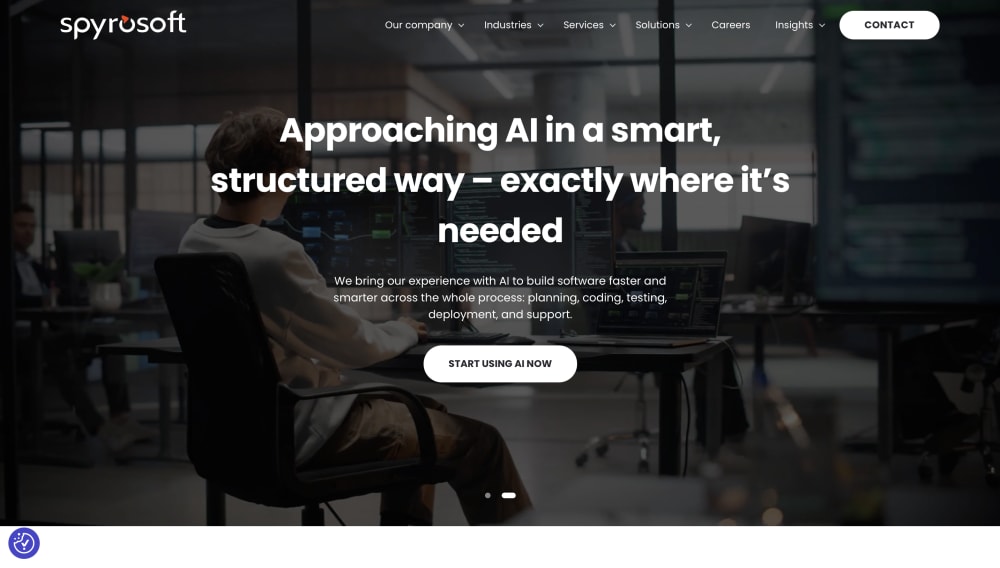
HQ: Wrocław | Founded: 2016 | Team: 1,500+ | Listed on WSE NewConnect
Spyrosoft is the most visible publicly traded Polish software house at scale, and one of the few firms on this list with a financial track record that can be independently verified: PLN 440.1 million in revenue for the first three quarters of 2025, 15 offices across 8 countries, and a listing on the Warsaw Stock Exchange’s NewConnect market.
What makes them worth including beyond the numbers is that their engineering-heavy domain specialization is real — embedded systems, automotive software, industrial IoT, cybersecurity, AI/ML. These aren’t adjacent service lines; they’re the core business. For European manufacturers, automotive OEMs, and enterprise software teams operating in regulated industrial environments, Spyrosoft has both the depth and the scale to handle it.
The public company structure brings quarterly reporting and audited financials, which matters for procurement teams in regulated industries that need long-term vendor stability documented, not just promised.
Best for: automotive, industrial IoT, embedded systems, and enterprise digital transformation at scale; particularly suited to DACH manufacturers and engineering-heavy enterprises.
5. Pragmatic Coders
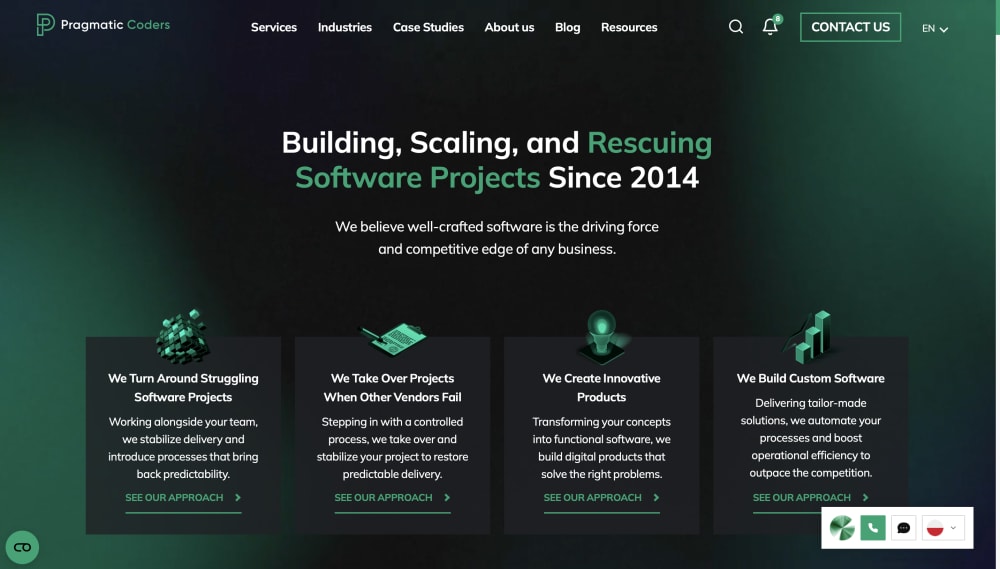
HQ: Kraków | Founded: 2014 | Team: ~100
Pragmatic Coders have built a specific reputation across three adjacent verticals — fintech, medtech, and mobility — that’s notably hard to manufacture. Clients in those sectors talk to each other, and referral credibility in regulated industries compounds differently than it does in generic software development.
Their delivery model leans on product discovery workshops before any code gets written, with a practical consequence: projects arrive at development with validated architecture decisions rather than assumptions that get expensively reversed mid-sprint. For fintech and medtech especially, where regulatory requirements surface in architecture rather than just compliance paperwork, that front-loaded discovery saves real money.
They’re smaller than Netguru or Boldare and stay that way deliberately — meaning senior engineers work directly on client projects rather than a pyramidal staffing model where juniors execute against senior-written specs.
Best for: fintech startups and scaleups, medtech product teams, mobility platforms; strong for companies building regulated-industry software from scratch.
6. Railwaymen

HQ: Kraków | Founded: 2009 | Team: ~50+ senior engineers
Railwaymen is the most deliberately small studio on this list, and that’s the point. Founded by three Rails developers in 2009, they’ve grown to around 50 senior engineers and explicitly haven’t scaled past it. The consequence is a staffing model where the person who does the pitch is the person — or directly manages the person — who writes the code.
Their industry focus is specific and consistent: FoodTech, FinTech, Construction, IoT. Across 150+ delivered projects, that domain depth shows up in their solution architecture — they’re not adapting a generic approach to your industry, they’ve built similar systems before and know where the edge cases hide.
Best for: startups and mid-market companies in FoodTech, FinTech, or Construction that want a compact senior team with real domain expertise and accountable delivery.
7. iteo

HQ: Katowice | Founded: 2010 | Team: ~150
Katowice and the broader Silesia region don’t get the attention Warsaw or Kraków do, but iteo has built a strong international client base from there, with mobile, web, and AI projects for clients in Western Europe and North America.
What makes iteo worth knowing: multiple consecutive years of Forbes Diamonds recognition reflect sustained growth rather than a one-year spike, and their Clutch record shows consistent delivery across native iOS/Android, Flutter, and React Native with AI integration. They describe themselves as a digital product studio rather than a staff augmentation provider — the right distinction, since their teams own product outcomes rather than billing hours against a backlog.
Best for: mobile and web product development for international clients; particularly strong for companies wanting AI-integrated mobile applications and mid-market product ownership.
How to Actually Evaluate a Polish Software House
The selection process has a few recurring failure modes worth naming.
The first is evaluating by team size without accounting for staffing model. A 300-person software house might put three junior developers on your project. A 60-person boutique might give you four senior engineers with direct accountability. Ask specifically: who will work on this engagement, at what seniority level, and are they employed directly or subcontracted?
The second is taking marketing case studies at face value. Ask for the name of a client contact you can actually call. Reluctance to provide a direct reference — not a written testimonial, an actual conversation — tells you something.
The third is not asking about AI integration specifically. In 2026, every Polish software house claims AI augmentation. Ask which tools, at which stages of the SDLC, with what quality gates. A specific, rehearsed answer indicates a real operational process; vague talk about “leveraging AI capabilities” indicates a marketing add-on.
The fourth is skipping the architecture discovery call. Any firm willing to send a proposal without running a technical discovery session first is working from assumptions. Legitimate partners insist on understanding the problem before scoping the solution.
FAQ
What’s a realistic hourly rate for a Polish software house in 2026?
Mid-to-senior engineers typically run €40–€90/hour, with full product teams (including design and QA) sitting at $70–120/hour for dedicated engagements. Boutiques with strong domain specialization — fintech, medical, automotive — command the higher end; staff augmentation providers sit lower. Comparing rates without accounting for seniority mix is largely meaningless.
Is Warsaw the best Polish city for software development?
Warsaw is the largest hub, but “best” depends on what you need. Kraków and Wrocław arguably have stronger engineering cultures for product-focused work. Gliwice (Boldare, TSH) has a dense concentration of product studios. Gdańsk (Neoteric, Scalac, DLabs.AI) is strong for AI, blockchain, and Scala. Bielsko-Biała (Selleo, CSHARK) is underrated for SaaS and fintech.
How long does it take to spin up a dedicated team in Poland?
Most established firms can have a team operational within two to four weeks. First-sprint velocity typically runs at 60–70% of sustained pace as the team aligns on architecture and tooling conventions — plan around that rather than treating week one as full capacity.
What’s the difference between a software house and staff augmentation?
Staff augmentation places individual developers into your team under your management. A software house provides a team that manages itself, owns architecture decisions, and is accountable for outcomes. The right model depends on whether you already have strong internal technical leadership (augmentation works) or need the partner to carry more delivery ownership (software house works).
Does the EU AI Act affect Polish software houses?
Yes, for high-risk AI applications. Polish software houses operating under EU jurisdiction are subject to the EU AI Act for systems falling under high-risk classifications, including medical devices, biometric identification, and critical infrastructure. The better firms have already started building Act requirements into their discovery and architecture processes — ask directly about a firm’s AI governance posture before signing for any AI-intensive engagement.
Share this article: