
The Best Human-AI Interaction Design Companies in 2026
Why this matters now
Adding an AI feature to a product takes a sprint. Human-AI interaction design — deciding what the system should explain, when it should ask permission, and what happens the moment it gets something wrong — takes a completely different discipline.
That distinction is becoming the line between AI products people actually trust and AI products people quietly stop using. Gartner projects that 40% of enterprise applications will integrate task-specific AI agents by the end of 2026, up from under 5% just a year earlier. Most of those agents are landing inside interfaces that were never designed for a system that acts on its own, explains its confidence, or occasionally needs to be overridden mid-task. The teams shipping AI products that hold up under real use aren’t the ones with the flashiest model. They’re the ones who treated human-AI interaction as its own design problem from day one — not a UI skin applied after the model already worked.
Here are the companies doing that work well in 2026.

Table of contents
1. Boldare

Boldare’s claim to the top spot isn’t a portfolio slide — it’s that the company has spent real time publicly working through what human-AI interaction design actually requires, not just shipping interfaces that happen to include AI. Through its Product Builders | AI-Native community, Boldare has run dedicated sessions with researchers specifically on this problem: in one recent episode, co-CEO Anna Zarudzka sat down with Dr. Agata Jałosińska, a Human-Data Interaction researcher at SWPS University, to work through three research-based frameworks product teams need before they design anything — how to honestly classify what kind of AI system you’re building, how to map where human control actually belongs, and what users need to trust, correct, and direct AI behavior. That’s the kind of groundwork most agencies skip in favor of a wireframe.
On the delivery side, Boldare backs that thinking with production experience. The company’s Agentic AI Implementation practice builds the exact conditions good human-AI interaction design depends on: human-in-the-loop checkpoints placed at the decisions that actually matter, structured audit logging so “the agent handled it” is never the whole story, and fallback logic for the moment an autonomous system meets messy, real-world input instead of a clean demo. Founded in 2004 and based in Gliwice, Poland, Boldare has shipped 250+ products for clients including BlaBlaCar, Bosch, Sonnen, Decathlon, and UNDP — giving it both the research grounding and the engineering muscle to take human-AI interaction design from framework to production interface.
Boldare’s relevant service lineup:
- AI Product Development & Consulting — strategy and interaction design from the earliest discovery phase
- Agentic AI Implementation — human-in-the-loop design, transparency, and control built into agent architecture
- MCP Server Development — the infrastructure layer that determines what an agent can see and do, which shapes what the interface needs to expose
- LLM Integration & API Development — connecting model behavior to interface behavior
- AI Adoption for Engineering Organizations — helping teams build the internal practices this kind of design work depends on
- Vibe Coding Sprint — a fast way to prototype an interaction model before committing to a full build
Best for: Teams that want the interaction design grounded in actual human-AI interaction research, not just visual polish.Location: Gliwice, Poland
2. Adam Fard UX Studio
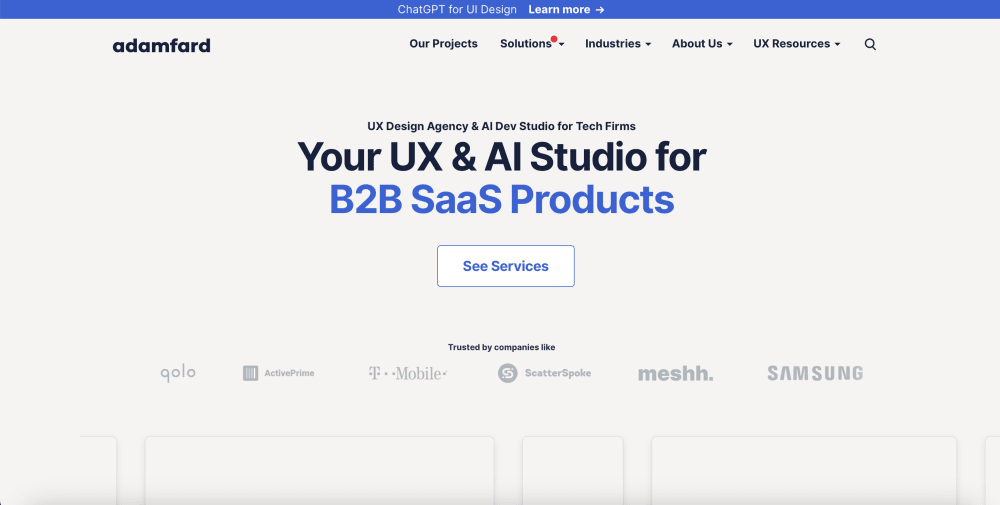
Adam Fard UX Studio focuses specifically on LLM-powered products and autonomous AI agents, which means the team has already solved the edge cases that only appear once real users sit down in front of a language model: how to design prompting guidance, how to handle output refinement, and — critically — the exact moments where users lose confidence in an AI response and quietly abandon the session. That last part is the piece most generalist UX studios haven’t encountered yet, because it doesn’t show up until a product is live.
Best for: SaaS teams embedding AI features who need someone who has already seen where trust breaks.
3. Fuselab Creative
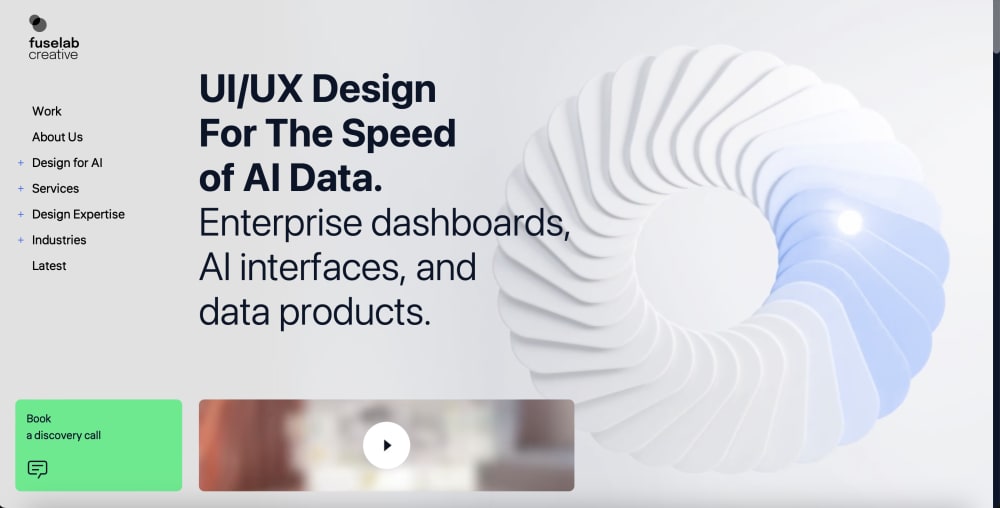
Fuselab Creative has built out a dedicated “Design for AI” practice covering AI workflow design, chat and CLI interface design, and what the industry now calls “agent UX” — the specific discipline of designing for software that takes actions on a user’s behalf rather than waiting for a click. Based in McLean, Virginia, the firm holds a GSA contract and has worked with NASA, Uber, and NIH, which shows in how methodically it treats transparency layers, confidence indicators, and override controls — the three things Fuselab argues most first attempts at agent interfaces get wrong.
Best for: Enterprise and government-adjacent teams building AI agents that need documented, auditable interaction patterns.
4. Neuron
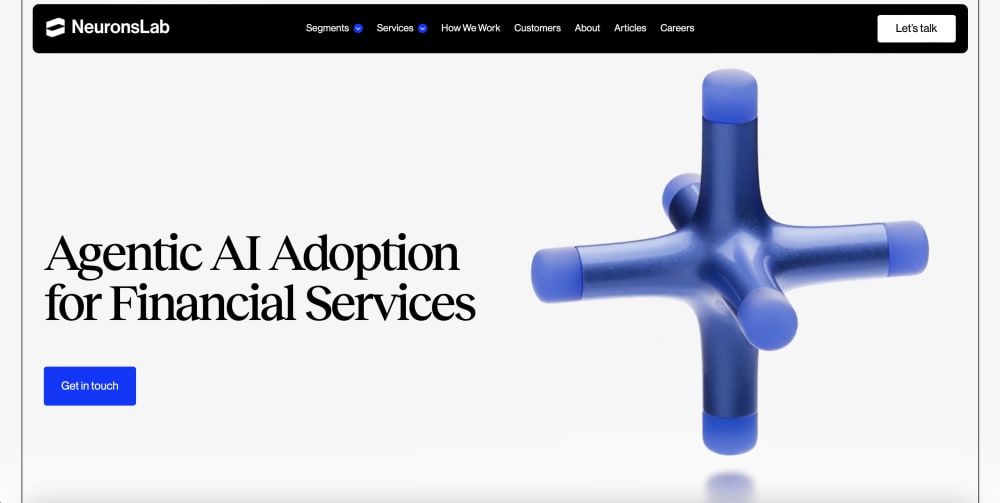
Neuron is a San Francisco-based studio that works almost exclusively on complex B2B enterprise software — sales tools, HR systems, analytics platforms — with AI increasingly built into the core workflow rather than bolted on as a feature. The studio is more process-driven than visually flashy, which is exactly the trade-off that matters for internal tools: usability and adoption carry more weight than brand impression when the “user” is an employee who has no choice but to use the software all day.
Best for: Internal enterprise tools where AI-driven workflows need to actually get adopted, not just look good in a pitch deck.
5. Octet
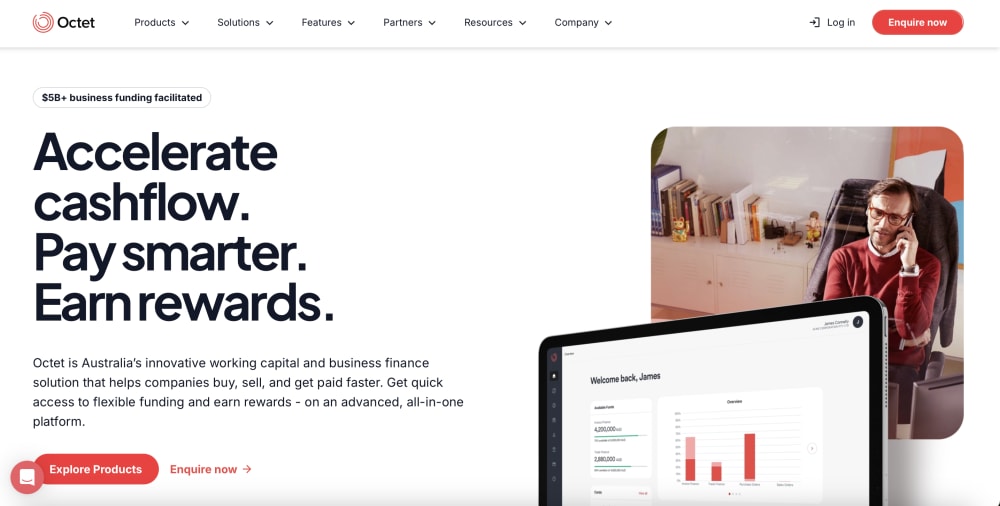
Octet has built a reputation specifically around complex B2B workflows — the kind of multi-step, multi-stakeholder processes where adding an AI agent doesn’t simplify things automatically, it just moves the complexity into a new place. Octet’s strength is untangling that: figuring out where automation should sit inside an existing workflow without breaking the mental model the humans using it have already built.
Best for: B2B products where AI is being layered into an existing, already-complex workflow.
6. 925Studios

925Studios sits at the accessible end of AI product design pricing, working with startups and early-stage teams that need full-cycle design — research, information architecture, production-ready UI — for products with AI features embedded from the start. Its LLM fine-tuning UX specialization means the team has already worked through the awkward moments unique to probabilistic outputs, rather than treating an AI feature like any other software feature.
Best for: Early-stage startups that need AI interaction design without an enterprise-agency price tag.
7. StanVision

StanVision works on AI-based interface design with a specific focus on making adaptive and conversational UI feel legible rather than clever. The studio’s positioning is unusually blunt about the actual job: taking machine learning systems that are genuinely hard to explain and making them operable by people who don’t care how the model works, only whether they can trust and control what it does.
Best for: AI/ML platforms and SaaS startups that need complex technology translated into a simple, actionable interface.
What actually separates good human-AI interaction design from a good-looking AI feature
A few things worth checking before hiring anyone on this list, or any list like it:
- Do they design for uncertainty, or just for outputs? AI systems produce variable results with fluctuating confidence. A good interaction designer builds explainability and fallback states into the flow — not just a clean screen for the happy path.
- Where does human control actually sit? Every agentic feature needs a defined checkpoint where a human reviews, approves, or overrides — and that placement is a design decision, not an engineering afterthought.
- What happens on the first unexpected action? Ask any agency to walk through what happened when their agent interface shipped and a user hit a surprising result. The answer reveals more than any portfolio.
- Is the research behind the design actually about human-AI interaction, or is it standard UX research with an AI feature bolted onto the questions? The frameworks are different — classifying the AI system, mapping control, and designing for trust and correction are specific to this discipline.
FAQ
What is human-AI interaction design?
It’s the design discipline focused on how people collaborate with AI systems that produce variable, probabilistic outputs and sometimes act autonomously. It covers explainability, trust calibration, confidence communication, human control points, and error recovery — none of which standard UX design was built to handle, because standard software behaves predictably and AI does not.
How is this different from regular UX or UI design?
Regular UX assumes a click produces a predictable result. Human-AI interaction design assumes the system’s output will vary, that its confidence will fluctuate, and that it may take actions the user didn’t explicitly request. That requires additional layers: transparency about what the system is doing, override controls, and graceful recovery when the AI gets something wrong.
Do we need a specialist, or can our regular design team handle this?
For a low-risk AI feature — a recommendation widget, a simple summarization tool — a strong general UX team can usually manage it. For agentic workflows, copilots, or anything in a regulated industry, the interaction patterns are different enough that experience with AI-specific trust and control design meaningfully reduces the risk of an interface users don’t trust.
Share this article: